Construction delays from manual glass handling cost billions yearly. Labor shortages grow. Safety rules tighten. Project timelines shrink. Vacuum lifters change that. They make lifts easier. They speed up installs. They keep teams safe. Start the transition with Wentrica, a manufacturer offering 15 years of expertise.

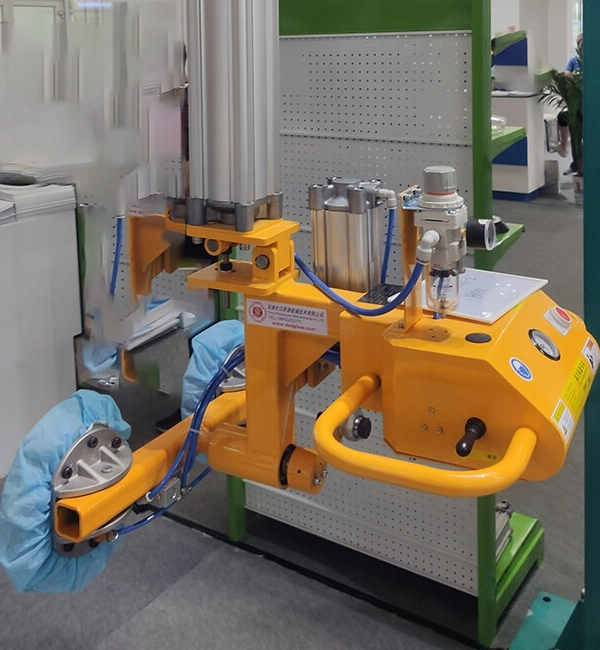
Why Do Construction Teams Need Vacuum Lifters?
Vacuum lifters tackle daily challenges on sites. They assist manual handling. Glass panels weigh hundreds of kilos. Teams struggle without help. Search results show lifters boost efficiency by 40 percent in urban builds. Labor shortages force change. Costs rise yearly.
Labor Shortages and Cost Savings
Shortages hit 20 percent in trades. One lifter replaces two workers. Payroll drops. Savings show in months.
Precision for Complex Installations
Curved glass needs exact placement. Lifters hold within millimeters. Rework falls. Seals fit tight.
Compliance with Safety Regulations
Rules demand secure grips. Lifters meet standards. Fines avoid. Audits pass smooth.
What Risks Come with Traditional Glass Handling?
Manual methods reveal dangers quickly. You hoist 200 kg loads without aids. Drops shatter panels. Injuries halt operations. Premiums soar due to claims. Without vacuum tech, risks multiply.
High Injury Rates from Manual Lifts
Strains strike daily from heavy sheets. Falls rack up $50,000 in costs each. Medical leave pushes back deadlines.
Time Delays and Material Damage
Placement drags on for minutes per panel. Breakage reaches 5 percent without steady grips. Replacements jam supply chains. Spontaneous cracks emerge later from improper handling.
Regulatory Fines for Non-Compliance
Load indicators go unchecked. Supervisors monitor every move. Violations trigger hefty penalties. Chemical exposure adds health hazards without proper PPE. Audits uncover gaps fast.
How Do Vacuum Lifters Improve Site Safety?
Vacuum lifters remove workers from high-risk zones. Strong suction secures panels firmly. Alarms alert for pressure drops. Operators control from safe distances. These tools cut injury rates significantly by minimizing manual exertion. Controls position at comfortable heights. Secure bonds prevent slips and drops during handling. Precision reduces strains from heavy loads. Built-in indicators stop accidents in real time. Overall, lifters transform sites into safer spaces.
Secure Grip Technology
Dual pumps maintain reliable holds. Power failures trigger safe modes for up to 30 minutes. Panels remain stable without risk.
Real-Time Pressure Monitoring
Screens display vacuum levels in clear units. Sensors halt motion at slight tilts. Emergency stops activate instantly.
Ergonomic Operator Controls
Joysticks require minimal force. Single operators manage 600 kg effortlessly. Physical strain decreases sharply.
What Features Make Vacuum Lifters Essential?
Core tech drives value. Vacuum creates suction. Motors rotate panels. Sensors adjust weight. Quattrolifts highlights mobility for 1800 lb loads. Units fit any size.
Pneumatic Power for Mobility
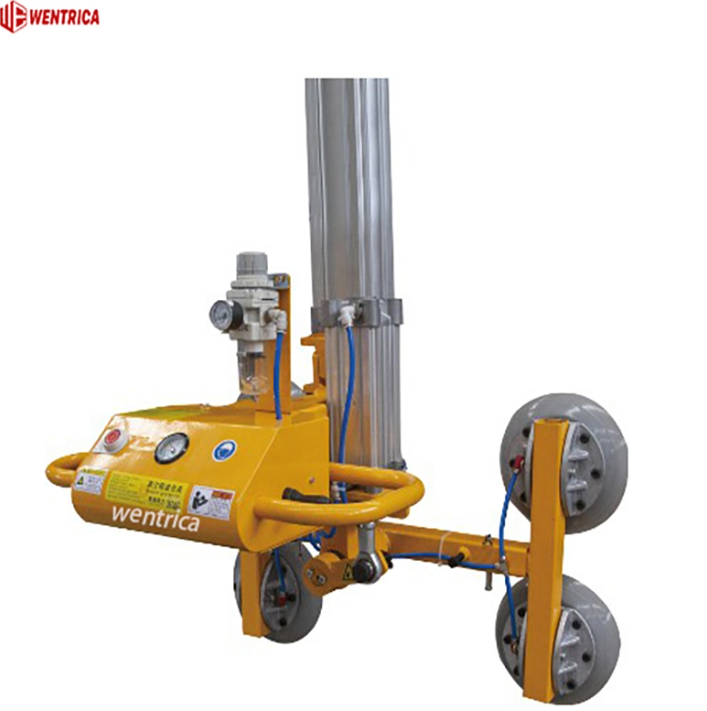
Compressors give 6-bar force. The Pneumatic Glass Vacuum Lifter spins 360 degrees. Crews place odd shapes quick.
Electric Turning Mechanisms
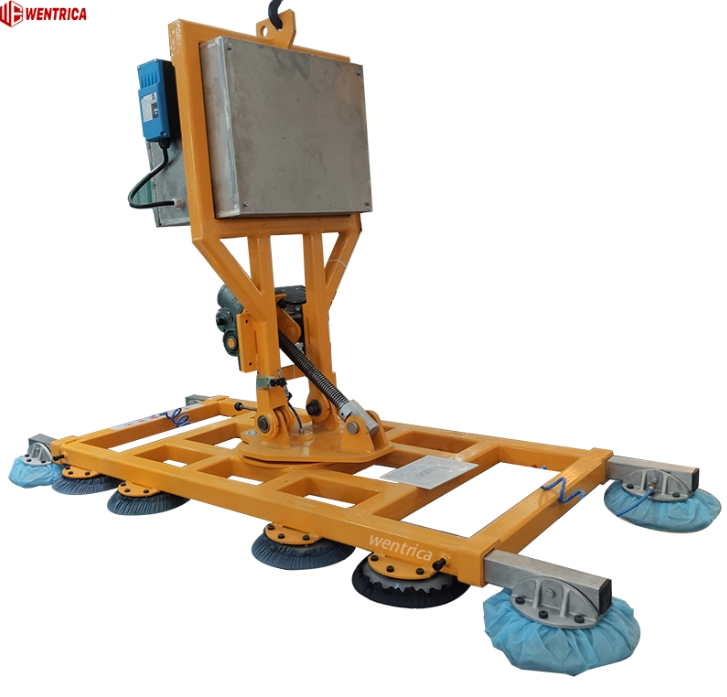
Batteries run 8 hours. Flips happen smooth. The Automatic Electric Glass Vacuum Lifter turns 90 degrees fast.
Versatile Rotation Capabilities
Pads tilt without tools. Balance holds on rough ground. Installs speed up.
Which Vacuum Lifters Suit Construction Needs?
Select lifters by panel weight and environment. Capacities begin at 500 kg for standard tasks. Match power to available sources like air or batteries. These tools excel in window and facade installations with secure grips. CE certifications enable global use. Quad-cup designs offer stability for large panes. Focus on rotation and tilt for precise placement during glazing.
Wentrica Pneumatic Glass Vacuum Lifter
Six pads handle 600 kg loads. Compressors supply air power. Angles lock securely. Curtain walls complete in reduced time.
Wentrica Automatic Electric Glass Vacuum Lifter
H-frame covers broad surfaces. Tilts to 90 degrees electrically. Adds full 360-degree rotation. Battery changes finish quickly.
Wentrica Air-Powered Vacuum Glass Lifter
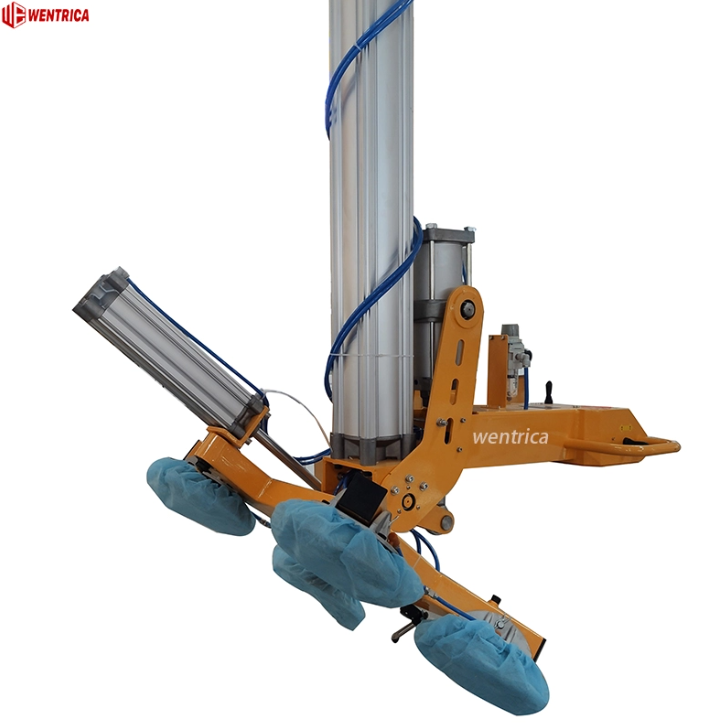
In the Air-Powered Vacuum Glass Lifter, four pads secure 500 kg tempered glass. Turnover aids thick sheets. Certifications span multiple areas. Cleaning takes seconds.
How Can You Integrate Vacuum Lifters into Projects?
Integration starts with basics. Attach one lifter to existing cranes or forklifts. Test on ground-level tasks first. Scale up as efficiency gains appear. Keep current equipment intact. Vacuum lifters connect via standard hooks, optimizing material flow in construction sites. Assess compatibility early to avoid disruptions.
Site Compatibility Assessments
Measure hook dimensions for secure attachment. Verify air pressure at 6 bar for pneumatic models. Ensure floors support combined lifter and load weights.
Operator Training Sessions
Morning sessions cover control buttons and safety protocols. Afternoon involves hands-on lifts with real panels. Certification completes the day. Schedule quarterly refreshers to maintain skills, as recommended in industry standards.
Routine Maintenance Guidelines
Wipe suction pads after each shift to remove debris. Test vacuum levels every morning for optimal grip. Replace filters every 500 operating hours. Parts deliver quickly from suppliers, ensuring 98% uptime in ongoing projects.
What Future Trends Involve Vacuum Lifters?
Connectivity leads change. Green power gains ground. Modular designs scale up. Integration with building information modeling (BIM) becomes standard. Real-time data feeds optimize crane schedules and material flow.
AI-Enhanced Predictive Handling
· Cameras scan for cracks before lift
· Software plots safest path in 3D
· Collisions drop to zero
· Data logs prove compliance for audits
Eco-Friendly Energy Sources
Power Type | Runtime | Charge Time | Site Fit |
Solar-topped batteries | 12 hours | 2 hours sunlight | Urban high-rises |
Hydrogen cells | 16 hours | 5 min swap | Remote megaprojects |
Hybrid air-electric | 10 hours | Plug-in overnight | Mixed indoor/outdoor |
Scalable Solutions for Megaprojects
Frames link four lifters into one unit. A single remote controls all movements. Facade sections install in days instead of weeks. Load sharing balances weight across pads. System scales to 2,400 kg total capacity without new cranes.
Start with one lifter. See output rise 40%. Contact Wentrica for a free quote. Upgrade projects now.
FAQ
Q1: What capacities do vacuum lifters offer?
A: Ranges hit 500 kg to 600 kg by model. Pads adjust for more. Some units reach 3000 kg for heavy glass in plants. Others handle 70 kg to 8500 kg with tilt features. Pick based on panel size.
Q2: What power fits remote areas?
A: Pneumatic takes site air. Electric uses batteries. Pneumatic suits no-power spots with compressors. Batteries last hours.
Q3: How quick is training?
A: Controls master in four hours. Practice adds two. Sessions cover safety and operation.
Q4: What upkeep ensures reliability?
A: Wipe pads daily. Check filters weekly. Service motors yearly. Clean cups prevent slips.


